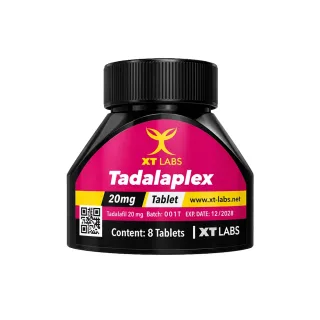











How Long Does Tadalafil Last?

This guide covers how long tadalafil remains active in the body, how quickly it begins to work, and what published FDA labels document about onset and duration at commonly discussed strengths including 5 mg, 10 mg, and 20 mg. It is written for readers already familiar with PDE5 inhibitors who want to understand what the labels report about timing.
How Long Does Tadalafil Last?
Tadalafil is documented to have a considerably longer duration of action than other PDE5 inhibitors. According to the FDA label for tadalafil tablets, the drug works by inhibiting phosphodiesterase type 5, an enzyme that breaks down cyclic GMP in smooth muscle cells of the corpus cavernosum. The inhibition of PDE5 enhances erectile function by increasing the amount of cGMP, but this effect requires sexual stimulation to initiate the local release of nitric oxide. Without sexual stimulation, tadalafil has no effect.
The same label explains that tadalafil's mechanism involves smooth muscle relaxation and increased blood flow into the corpus cavernosum during sexual arousal. Another FDA label for tadalafil confirms that the drug is a selective inhibitor of PDE5, which is found not only in the corpus cavernosum but also in the smooth muscle of the prostate, bladder, and vascular tissues. The extended duration that users report with tadalafil compared to sildenafil is a consistent finding across clinical use, though the labels themselves focus on mechanism rather than providing specific hour counts for duration of effect.
A 2017 systematic review and meta-analysis in International Urology and Nephrology directly compared tadalafil with sildenafil and found that both drugs had similar efficacies and overall adverse event rates, but tadalafil significantly improved psychological outcomes and was preferred by patients and their partners over sildenafil. This preference is often attributed to the longer window of effectiveness that tadalafil provides.
How Long Does Tadalafil 20 mg Last?
The 20 mg strength is one of the most commonly discussed doses in published sources, though the FDA labels do not provide different duration figures for different strengths. According to the FDA label for tadalafil film-coated tablets, the drug's selectivity for PDE5 and its inhibition of cGMP degradation apply regardless of dose, with the understanding that sexual stimulation is required for any effect to occur. The label does not distinguish between how long 20 mg lasts compared to lower doses, focusing instead on the fact that PDE5 inhibition by tadalafil occurs only when nitric oxide is released locally in response to arousal.
The mechanism described in the labels suggests that the duration of tadalafil's presence in the body and its activity at the PDE5 enzyme are what determine how long it remains effective. Because tadalafil is a selective inhibitor, its action continues as long as sufficient concentrations remain in the tissue, but the labels stop short of specifying hours. Clinical experience and patient reports suggest a substantially longer duration than sildenafil, often extending well beyond the timeframe of sildenafil's documented effect.
How Long Does Tadalafil 5 mg Last?
The 5 mg dose is often discussed in the context of daily use rather than on-demand dosing. An FDA label for tadalafil describes the same mechanism of PDE5 inhibition and cGMP enhancement that applies to all doses. At 5 mg, the drug still requires sexual stimulation to produce an effect and has no direct relaxant effect in the absence of nitric oxide release. The label notes that tadalafil inhibits PDE5 in multiple tissues, including the corpus cavernosum, prostate, and bladder, and that the mechanism for its effects on benign prostatic hyperplasia symptoms has not been fully established.
A 2025 review in JAMA on lower urinary tract symptoms in men reported that phosphodiesterase 5 inhibitors such as tadalafil improve symptoms with a mean improvement of 3 to 10 points on the International Prostate Symptom Score, and that combination therapies are more effective than monotherapy. The review did not break out duration by dose but noted that tadalafil is among the medications used to manage symptoms associated with benign prostatic hyperplasia.
How Long Does Tadalafil 10 mg Last?
At the 10 mg strength, tadalafil operates by the same mechanism documented in the FDA labels: selective inhibition of PDE5 in the presence of sexual stimulation. The FDA label for tadalafil tablets explains that the drug enhances erectile function by preventing the breakdown of cGMP, which causes smooth muscle relaxation and increased penile blood flow. The label makes clear that without sexual arousal and the resulting release of nitric oxide, PDE5 inhibition by tadalafil does not produce an erectile response.
The labels do not provide distinct duration data for the 10 mg dose compared to other strengths, but the pharmacological principle remains consistent across all doses: tadalafil's activity persists as long as therapeutically relevant concentrations of the drug remain in the tissue. The absence of dose-specific duration information in the labels reflects the fact that mechanism and selectivity, rather than dose, determine the drug's profile.
How Long Does It Take for Tadalafil to Work?
The onset of tadalafil's effect is a function of how quickly the drug reaches sufficient concentrations in the target tissue to inhibit PDE5. The FDA labels do not specify an exact onset time in minutes but emphasize that sexual stimulation is required for any effect to occur. According to the FDA label for tadalafil film-coated tablets, the drug works by increasing cGMP levels in the corpus cavernosum when nitric oxide is released during arousal, resulting in smooth muscle relaxation and inflow of blood.
A 2011 systematic review in BMJ Clinical Evidence on erectile dysfunction included phosphodiesterase inhibitors and noted that these drugs are effective in improving erections in men with ED of various causes. The review did not provide specific onset times for tadalafil but confirmed that the drug class, which includes tadalafil, is well-supported by evidence for efficacy. Clinical use suggests that tadalafil may take somewhat longer to reach peak effect compared to sildenafil, but the labels focus on mechanism rather than precise timing.
How Fast Does Tadalafil Work?
How fast tadalafil works depends on absorption and distribution to the tissues where PDE5 is present. The FDA labels describe tadalafil as a selective PDE5 inhibitor but do not break down speed of onset in granular detail. The FDA label for tadalafil states that the drug enhances erectile function by increasing cGMP in the presence of sexual stimulation, and that it has no effect without arousal. This means the drug must first be absorbed and then act in concert with physiological arousal to produce an effect.
In practical terms, patients and clinicians have observed that tadalafil's onset is not instantaneous but occurs within a timeframe that allows for flexibility in timing relative to sexual activity. The lack of specific onset data in the labels reflects the variability inherent in individual response and the requirement for sexual stimulation, which is not a fixed parameter.
What Is the Best Time to Take Tadalafil?
The best time to take tadalafil depends on whether it is being used on-demand or as part of a daily regimen. For on-demand use, the drug must be taken in advance of anticipated sexual activity, allowing time for absorption and distribution to the corpus cavernosum and other tissues where PDE5 is present. The FDA label for tadalafil film-coated tablets emphasizes that sexual stimulation is required for the drug to have an effect, so timing must account for both pharmacokinetics and the likelihood of arousal.
For daily dosing, typically at lower strengths such as 5 mg, the goal is to maintain steady levels of the drug in the body so that it is available whenever sexual activity occurs. A 2024 report in Current Urology Reports on erectile dysfunction in adolescents and young adults noted that in a large pediatric urology practice, most patients with psychogenic erectile dysfunction were rehabilitated with tadalafil starting at 5 mg taken daily until tapered. This approach reflects a strategy of maintaining consistent drug levels rather than timing doses around specific events. The choice between on-demand and daily use, and the specific timing within those frameworks, is a clinical question best addressed with a qualified healthcare provider.
How Tadalafil Compares to Sildenafil and Other PDE5 Inhibitors
Tadalafil and sildenafil are both PDE5 inhibitors, but they differ in selectivity, duration, and side effect profiles. The FDA label for sildenafil citrate tablets describes sildenafil as enhancing the effect of nitric oxide by inhibiting PDE5, which is responsible for degradation of cGMP in the corpus cavernosum. The label notes that sildenafil is approximately 4,000-fold more selective for PDE5 compared to PDE3, which is involved in control of cardiac contractility, and only about 10-fold as potent for PDE5 compared to PDE6, an enzyme in the retina involved in phototransduction.
The 2017 systematic review and meta-analysis that directly compared tadalafil with sildenafil found that both drugs had similar efficacies and overall adverse event rates, but tadalafil was associated with higher rates of myalgia and back pain, while sildenafil was associated with a higher rate of flushing. Patients and their partners preferred tadalafil over sildenafil, which the authors attributed to the longer duration of effect. A 2013 review in Current Pharmaceutical Design on sildenafil and cardioprotection mentioned that the PDE5 inhibitor class, which includes sildenafil, vardenafil, tadalafil, and avanafil, was developed for the treatment of erectile dysfunction and that sildenafil and tadalafil have also been approved for the management of pulmonary arterial hypertension.
A 2012 review in the European Heart Journal on nitric oxide synthases explained that phosphodiesterase 5 inhibitors such as sildenafil, vardenafil, and tadalafil require at least residual activity of neuronal nitric oxide synthase for their action, underscoring that all drugs in this class depend on the nitric oxide pathway to produce an effect. The differences in duration and side effect profile make tadalafil a distinct option within the PDE5 inhibitor class, but the fundamental mechanism is shared.
This guide is general information compiled from published FDA labels and peer-reviewed sources. It is not medical advice, and decisions about the use of tadalafil or any other medication should be made in consultation with a qualified healthcare provider who can assess individual circumstances and health status.